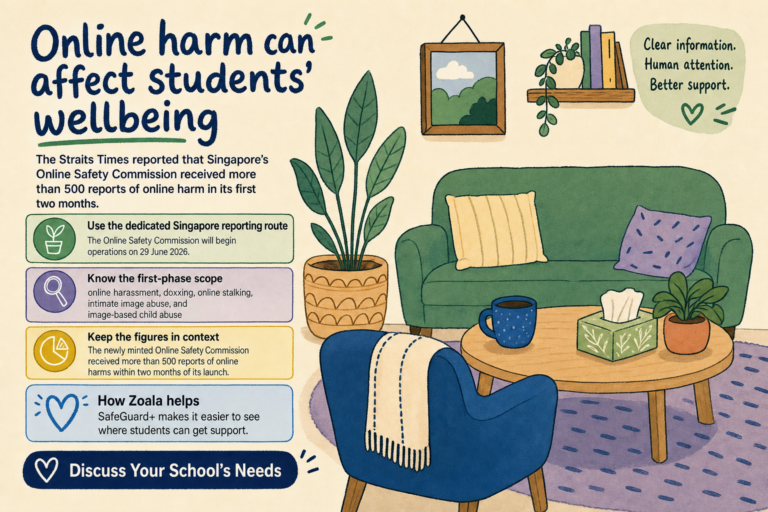

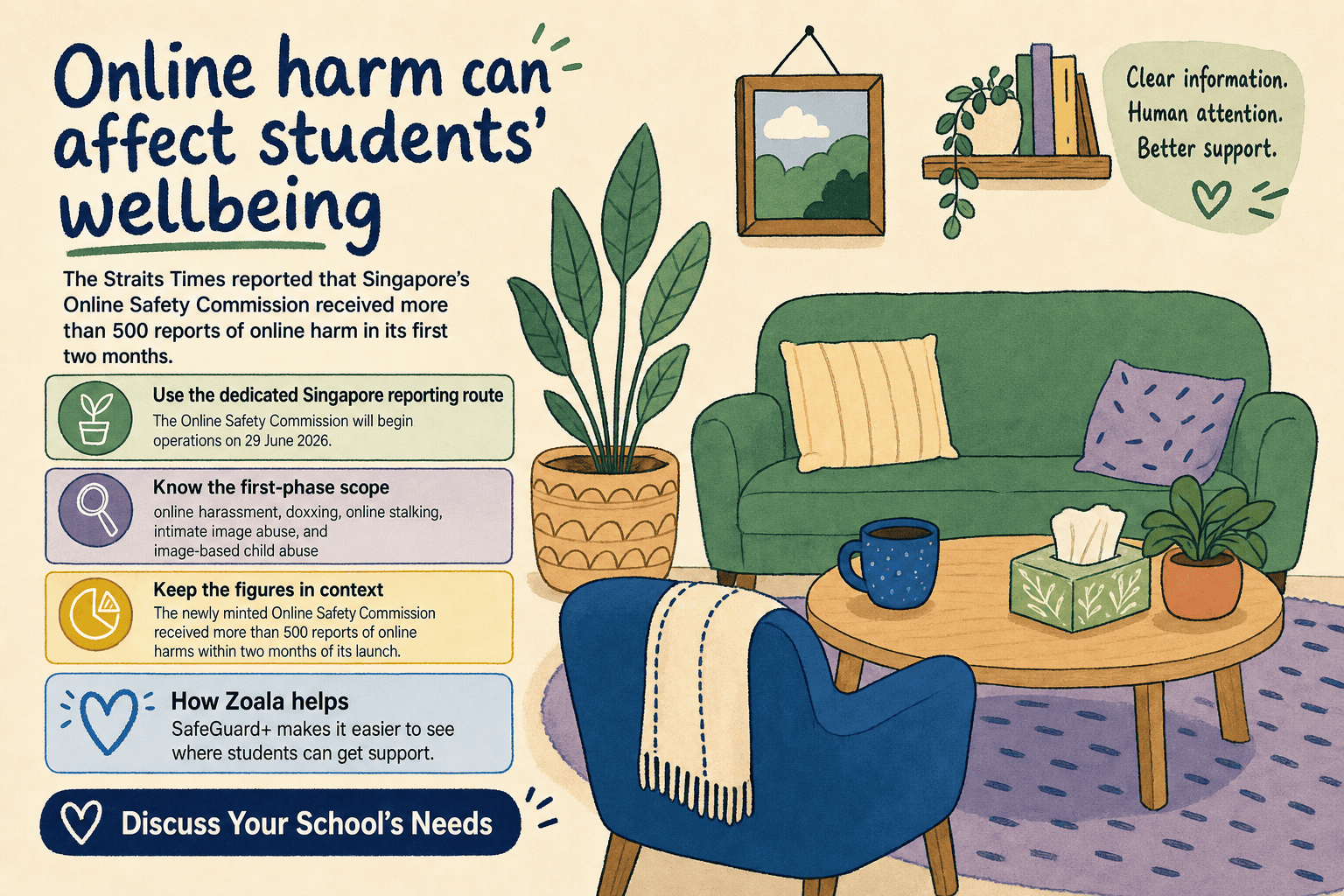
When online harm follows a young person into everyday life, the effects may not stay online. A report by The Straits Times says Singapore’s Online Safety Commission received more than 500 reports of online harm during its first two months of operation. Close to one-fifth of eligible reports involved people aged 18 and under, including a seven-year-old reported to have experienced doxxing.
The report also described cases involving online harassment, stalking, unsolicited explicit content and AI-generated sexual images. These accounts are a reminder that students may need help with online harm before they know how to explain what has happened or where to turn.
A concern that extends beyond one setting
International reporting has also drawn attention to online communities and digital spaces that may expose young people to harmful content or exploitation-related risks. That report provides wider context rather than evidence of prevalence in Singapore or across Southeast Asia.
The local picture is clearer about the need for a route to redress. Singapore’s Online Safety Commission began operations on 29 June 2026 and provides a dedicated reporting pathway for people affected by specified online harms. Its first-phase remit includes online harassment, doxxing, online stalking, intimate image abuse and image-based child abuse.
For schools, the practical question is not simply whether a harmful post can be removed. It is also whether a student can ask for help, whether the right adults receive relevant information, and whether the school knows what should happen next.
Why reporting pathways matter
Students may hesitate to report online harassment or doxxing. They may worry about losing access to a social group, being blamed for what happened, or making the situation worse. Some may not recognise that sharing personal information, threats or sexualised material can require adult support.
A clear pathway can reduce the number of decisions a student has to make alone. It can explain who they can contact, what information may be reviewed, and how the school will follow its safeguarding procedures.
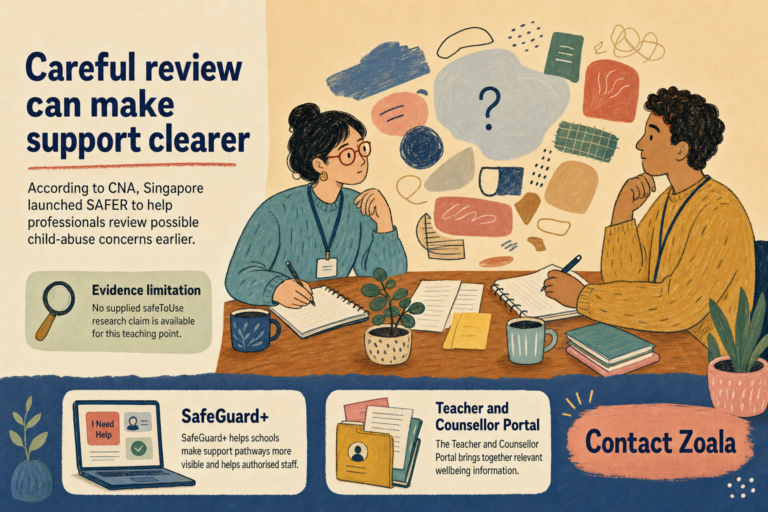
That pathway should remain grounded in human judgement. A report is not proof that an event occurred, and an alert is not a diagnosis or final safeguarding decision. Authorised staff need to review the available context, speak with the student where appropriate and follow the school’s established process.
What schools can put in place
1. Make the first step easy to find
Students should be able to see how to ask for help without searching through complicated policies. The route might include a trusted teacher, counsellor, safeguarding lead or another designated support person. Schools should explain what happens after a concern is shared, using age-appropriate language.
2. Agree who reviews a concern
Staff need clear responsibilities for receiving, reviewing and escalating reports. The process should cover urgent concerns, concerns received outside normal school hours, record-keeping and communication with families where appropriate. Schools should also make sure access to sensitive information follows staff roles and safeguarding responsibilities.
3. Keep the student’s wider context in view
A single message or report cannot describe the whole person. Staff may need to consider the student’s relationships, recent events, learning experience, family context and existing support network. The aim is to understand what the student needs next, not to reduce their experience to a label or score.
4. Build follow-up into the process
Removing harmful content may be an important step, but it may not be the end of the student’s experience. A follow-up conversation can help the school understand whether the student feels supported, whether further action is needed and who is responsible for the next step.
How Zoala can support a school’s existing process
We believe technology should strengthen human care, not replace it. Zoala is a student wellbeing platform designed to help schools make emotional wellbeing part of everyday school life. In this context, two features may support a clearer connection between student voice and authorised follow-up.
SafeGuard+: making support routes more visible
When students face online harassment, doxxing or another difficult experience, SafeGuard+ can provide clearer routes to available help. Its “I Need Help” button can direct students towards school-defined support pathways, while a safety plan can help them identify coping actions, supportive people and useful next steps.
Configured flagging and alerts may provide an additional signal for authorised school personnel when information may require review. SafeGuard+ does not verify a report, provide emergency response, guarantee intervention or replace the school’s safeguarding process. If someone may be in immediate danger, they should contact a trusted adult, the school’s designated support person or the appropriate local emergency service.
Teacher and Counsellor Portal: organising relevant follow-up
Reports about online harm may require context, communication and documented follow-up. The Teacher and Counsellor Portal brings together relevant wellbeing information, communication and follow-up workflows for authorised school staff.
This can help a school team organise the information it is permitted to review and record the next action within its agreed process. The portal does not confirm that harm occurred, make final safeguarding decisions or replace professional judgement. Counsellors and educators remain responsible for understanding the student’s circumstances and deciding what support is appropriate.
A calmer, clearer response
The Singapore report is about formal redress, but it also points to an everyday need: students should know that asking for help is possible, and adults should know how to respond when a concern reaches them.
For schools across Malaysia, Singapore, Hong Kong and Indonesia, the specific reporting routes and safeguarding requirements will differ. The shared principle is practical and human: make support visible, explain the process clearly, protect the student’s dignity and keep trained adults at the centre of follow-up.
The most relevant next step for a school reviewing its current approach is to Discuss Your School’s Needs.
Sources
- https://www.straitstimes.com/tech/over-500-cases-of-online-harms-reported-to-spore-agency-in-first-two-months-youngest-victim-aged-7
- https://ua.news/en/world/adl-zapustila-khab-pro-onlain-spilnoti-shcho-pidshtovkhuiut-molod-do-nasilstva-jerusalem-post
- https://www.osc.gov.sg/newsroom/the-online-safety-commission-begins-operations-on-29-june-2026